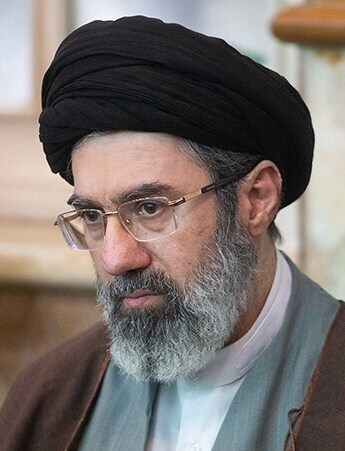
The Shadow of Demise: Khamenei's Escape and Mojtaba's Pivotal Role
The political landscape of Iran is perpetually fraught with intrigue, but few scenarios carry the dramatic weight of an ailing Supreme Leader preparing a clandestine escape. Recent international reports, most notably those initially surfaced by *The Times* based on intelligence leaks, paint a vivid picture of Ayatollah Ali Khamenei, the 86-year-old Supreme Leader of the Islamic Republic, meticulously crafting an emergency "Plan B" for his flight from Iran. At the heart of this high-stakes contingency plan, and indeed central to Iran's tumultuous future, is his son, Mojtaba Chamenei. While initial reports might have hinted at a widespread collapse that could make even a figure like
Mojtaba Chamenei tot, intelligence sources confirm his survival amidst the recent turmoil, placing him firmly in the spotlight of any potential succession or escape narrative. His designated, yet unsecured, role makes him a critical piece in Khamenei's strategy to preserve not just his life but also the legacy and immense wealth of his family.
Cracks in the Citadel: The Unrest Fueling "Plan B"
The catalyst for such an extraordinary escape plan lies in the escalating domestic instability gripping Iran. By early 2026, the nation found itself in the throes of widespread, violent protests that have paralyzed dozens of cities. These demonstrations are far from isolated incidents; they are a manifestation of deep-seated economic despair, characterized by skyrocketing living costs, rampant inflation, and pervasive unemployment. Beyond economic grievances, the protests have evolved into open and vehement criticism of the regime itself, signaling a profound erosion of public trust.
The state's response has been predictably brutal, with security forces resorting to deadly force, resulting in numerous fatalities, hundreds of injuries, and thousands of arrests. However, what makes the current situation uniquely perilous for the regime are the increasingly credible reports of dissent within its own ranks. Whispers of disloyalty and refusal of orders are beginning to surface among segments of the Revolutionary Guards and the regular army, indicating fundamental cracks in the regime's once-unshakeable security apparatus. It is precisely this erosion of loyalty, the potential for state control to unravel, that serves as the critical trigger for Khamenei’s "Plan B." The very fabric of the Iranian state appears to be fraying, pushing its most powerful figure to contemplate a dramatic exit.
Moscow Bound: Anatomy of a High-Stakes Extraction
According to the leaked intelligence reports, Khamenei's "Plan B" is an intricate, multi-layered operation designed for rapid execution once the security forces demonstrate a clear loss of control. The plan envisions the spiritual leader, along with an exceptionally tight inner circle of no more than 20 individuals, fleeing Teheran. This select group includes his closest confidantes, key advisors, and, crucially, family members. Among them, his son Mojtaba Chamenei is not merely a family member but explicitly described as a "designated successor" within the context of the escape, underscoring his pivotal importance.
The chosen destination for this audacious flight is Moscow, identified as the "only realistic goal." This choice is no accident. The plan reportedly draws clear inspiration from the dramatic escape of Syrian dictator Bashar al-Assad in December 2024, who, facing a rebel assault on Damascus, fled with his family directly to Russia, where he was granted asylum by Vladimir Putin. Khamenei, it appears, views Putin as his last truly reliable ally. Multiple sources suggest a long-standing admiration for the Russian leader and a belief that Russian culture aligns more closely with Iran's than any Western alternative. This geopolitical alignment, coupled with Russia's proven track record of offering refuge to embattled allies, makes Moscow the obvious, perhaps even the sole, viable sanctuary. The logistics of such an extraction would undoubtedly be complex, requiring immense coordination and secrecy to navigate international airspace and potential interdictions.
Beyond Survival: Mojtaba Chamenei and the Contested Succession
Mojtaba Chamenei's presence in the escape plan highlights his unique and controversial position within the Iranian power structure. While the initial reports of Khamenei's demise (the original context mentioning "Chamenei tot") created a constitutional crisis, Israeli intelligence sources clarified that Mojtaba Chamenei, despite being a potential target, *survived* recent attacks. This survival is critical because it keeps him in play for a succession battle that is anything but straightforward. The Iranian constitution, specifically Article 111, dictates that upon the Supreme Leader's death, an interim council—comprising the President, the Judiciary Chief, and a representative of the Guardian Council—assumes his duties until the 88-member Assembly of Experts elects a permanent successor.
Mojtaba's designation within the escape plan as a "designated successor" stands in stark contrast to the constitutional process, which does not guarantee him a role. His path to leadership is fraught with challenges, as he lacks overt public support or a clear institutional position. His influence primarily stems from his close relationship with his father and his reported sway over various security and intelligence bodies. The fact that he is considered a crucial part of the escape group, and not just a secondary figure, suggests Khamenei views his son's continued influence, if not outright leadership, as vital to the family's interests, even in exile. This complex interplay of constitutional process, popular unrest, and familial ambition is at the core of Iran's looming leadership vacuum, a topic explored further in
Iran's Succession Crisis: Mojtaba Chamenei's Path After Khamenei's Demise and
Khamenei's Death: What Awaits Mojtaba Amid Iran's Power Vacuum?.
The Golden Parachute: Securing Exile and Legacy
A crucial, often overlooked, aspect of any authoritarian leader's escape plan is the securing of their vast personal wealth. Khamenei is no exception. Estimates, including older Reuters investigations, place the wealth controlled by Khamenei at approximately $95 billion, managed primarily through powerful, opaque entities like Setad (the "Executive Headquarters of Imam's Order"). "Plan B" extends beyond mere physical extraction; it includes intensive preparations to ensure a secure and comfortable existence in exile. This involves strategically reallocating liquid assets, transferring ownership of foreign real estate, and orchestrating complex financial maneuvers to safeguard his immense fortune.
Experts like Beni Sabti, a former Israeli intelligence officer who himself fled Iran, emphasize the critical role of these financial preparations. Sabti asserts that Russia is indeed "the only place he can go," underscoring that other potential havens like China or Gulf Arab states are deemed unrealistic due to a lack of personal rapport or unfavorable geopolitical alignments. The ability to move and secure such a colossal sum of wealth across international borders underscores the sophisticated network and resources at Khamenei's disposal, providing him with a golden parachute to cushion his fall should the regime collapse.
The future of Iran hangs in the balance, a precarious dance between popular discontent, a crumbling security apparatus, and the desperate maneuvers of a leader clinging to power and preparing for the unthinkable. Mojtaba Chamenei's role in this unfolding drama is multifaceted: a survivor of attacks, a designated escapee, and a central, yet profoundly challenged, figure in the opaque world of Iranian succession. His fate, intertwined with his father's escape plan, will undoubtedly shape the trajectory of a nation teetering on the brink.
Conclusion
Mojtaba Chamenei emerges as a critical, albeit complex, figure in the unfolding drama of Iran's leadership. Far from being a mere bystander, he is intrinsically linked to his father's meticulous escape plan to Moscow, serving as a key family member and a designated, though constitutionally unsecured, successor. His survival amidst recent turmoil solidifies his place in any post-Khamenei power dynamic, regardless of whether that scenario unfolds in Iran or in exile. The existence of such an elaborate escape strategy, coupled with the methodical safeguarding of immense wealth, underscores the dire internal pressures threatening the Iranian regime. The intricate interplay of domestic unrest, shifting loyalties within security forces, and the strategic alignment with Russia highlights the desperate measures being considered by Iran's highest authority. As the world watches, the ultimate outcome for both Khamenei and Mojtaba will undoubtedly send ripples across the Middle East and beyond, marking a potentially transformative chapter in Iranian history.